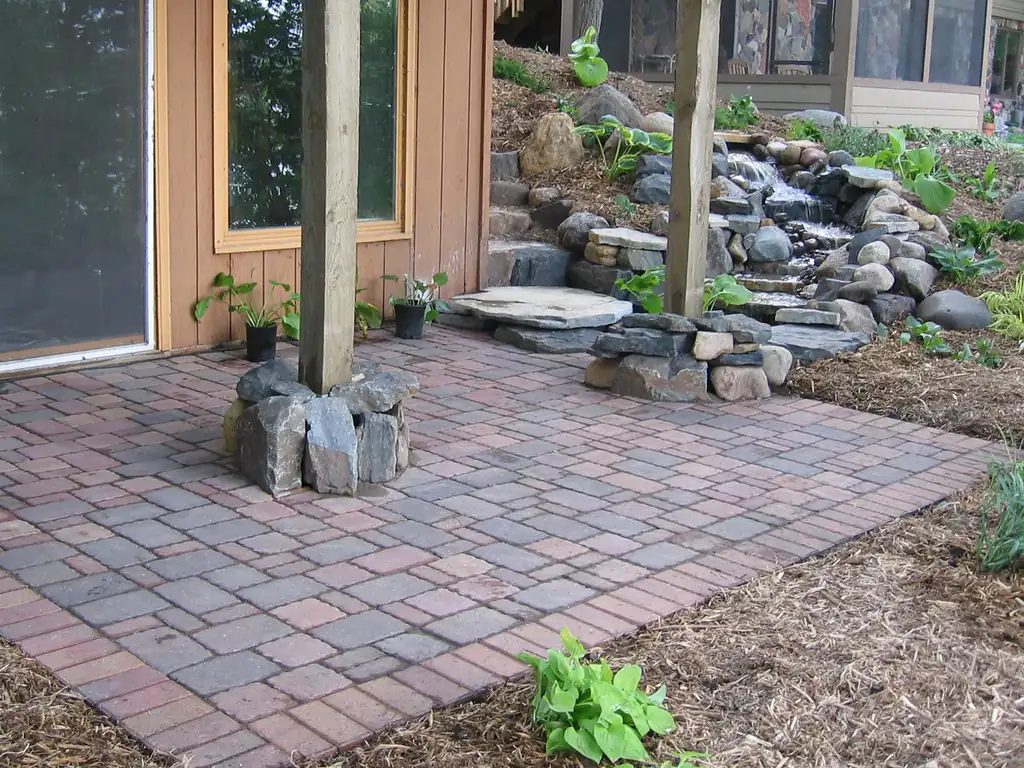
New Palestine is a small town with a clear rule: patios are on the Town's permit list. Here's what that means, why drainage matters so much on Hancock County ground, and what patios typically cost in the Indianapolis area.
New Palestine puts patios on its permit list
The Town of New Palestine's forms page includes a combined "Gazebo – Fence – Patio – Driveway" permit application2.
Read moreShow less: New Palestine puts patios on its permit list
If you live inside town limits, plan on a permit for a new patio. For questions about your lot, the Town's FAQ directs residents to Town Hall4.
The zoning ordinance explains the bigger picture. Article 7 says an Improvement Location Permit (ILP) is required before any structure or improvement is located on a lot5. Two parts of that article are worth knowing before you book a crew:
- Timing. Work under an ILP must start within 6 months and be finished within 12 months of issue. A permit pulled in fall for a spring build is usually fine; one pulled and then forgotten may lapse.
- Drainage. Improvements must meet the soil and drainage conditions in the Town's Design Standards Manual and the requirements of the Town and County Drainage Boards.
The ordinance also sets general site-plan requirements for ILP applications. Ask Town Hall exactly what a residential patio submission needs so your contractor prepares the right drawing the first time.
Why drainage matters on Hancock County ground
Hancock County is flat, wet glacial till country.
Read moreShow less: Why drainage matters on Hancock County ground
A soil study of the county found the Crosby–Brookston association covers about 72% of the county and Miami–Crosby another 17%3. The USDA soil survey agrees: by mapped acreage, Crosby (about 40%) and Brookston (about 31%) dominate6.
Purdue Extension describes Crosby as somewhat poorly drained over slowly permeable dense till, and Brookston as poorly drained soil in depressions7. On a patio site that means two things. First, the base has to be deep and well compacted, because saturated clay that freezes is what heaves pavers. Second, the surface has to slope away from the house toward somewhere water can actually go. In a low Brookston spot, ask whether the contractor recommends a drain or a gravel outlet rather than simply pitching water toward the yard.
Indiana's residential code lists a 30-inch frost depth for Hancock County. That applies to footings for pergolas, seat walls or a masonry fireplace, not to the pavers themselves8.
What a patio costs in the New Palestine area
There's no published New Palestine-specific price data that we trust, so use metro numbers as a starting point.
Read moreShow less: What a patio costs in the New Palestine area
Angi reports an Indianapolis-area average of $3,637, with most homeowners paying $2,297–$6,6991. Lots that need extra base or drainage work cost more. See our paver patio cost guide for size-by-size tables.
Permits
Permit rules in New Palestine are set by the Town of New Palestine, not by Indianapolis, and they can change. The contractor you hire should confirm whether your specific project needs a permit and pull it if so. If you want to double-check, call the Town of New Palestine building or planning department before work starts.
Questions to ask New Palestine contractors before you sign
A short checklist for comparing contractors before you sign.
Read moreShow less: Questions to ask New Palestine contractors before you sign
- Will you prepare the site drawing the Town wants with the patio permit application?
- Where does water go after it leaves the patio, and does my lot need a drain?
- Can you start and finish inside the ILP's 6- and 12-month windows?
- Who applies for any permit or zoning approval, and is that time in the schedule?
- Is the workmanship warranty in writing, and can you show proof of insurance?
Indiana requires a written contract for home improvement work over $1509. Make sure yours lists scope, materials, price and timeline.